
KIRKMAN HISTORY FROM 1877 ( from John Wyndham) – PRESENT DAY FOCUSSING ON COOCH (John Meredith Kirkman) WYNDHAM KIRKMAN MOLLY KIRKMAN AND GIRLS (KITTY, ELENOR AND ROSALIE)
BASIC BEGINNING
The son of a clergyman, John Kirkman arrived in Natal in 1868 and turned his attention to sugar planting. He was president of Natal Sugar Association. A member of the Natal Legislative Assembly. And he saved the life of bishop Colenso when crossing a flooded Umsindusi River
John Kirkmans public-spiritedness is exemplified by the occasion on which, while he was up the road putting a new roof on the vicarage, his wife in bed with a new born child, used an umbrella to keep off the rainwater pouring through the leaking roof of the Kirkman homestead.
John Kirkman married Sarah Jane Chadwick (his second marriage)
Extract from Notes on Natal published in 1872 describing original Beeverstowe – The charming residence of Mess T and J Kirkman (Wyndhams Dad – John and his uncle Thomas)
Our roadless track seems to have led us to paradise for to wet and weary men an English home and an English greeting amidst scenes as lovely as the eye could wish to rest on, is about as close a realisation of the idea as our materialistic beings can understand. Beeverstowe crowns the brow – but not the highest point – of a spur projecting from the head of a valley through which an ever-flowing stream winds amidst bush and herbage. The valley stretches below high bushy hills shut it in on either side but in front it spreads out and is broken by knolls and heights until the view is closed by the level sweep of the uplands. Behind the house may be seen the gem of the valley – where the Equeefa falls over a cliff of white rock to a depth of 200 feet. The gleam of the water contrasting beautifully with the dark foliage of the trees and shrubs that line the gorge above and that cling to the rocks down which it tumbles.
Although Mr Kirkmans residence crowns the summit of a lofty knoll his acquaintance with civil engineering has enabled him to bring to his door an ever-running stream of pure water….
While walking along the edge of this little stream we skirt the young coffee, corn and cotton plantations that represent the industry of the place. There seems no reason to doubt why any one of these will not succeed here. Below in a deep valley the little river has been already dammed up and the foundations sunk for the water-mill what is to be erected. The proprietors let no grass grow under their feet and the energy of their operations directed as it is by intelligence and education augurs well for the future.
I would that a vigorous colonising policy could plant innumerable Beeverstowes, adorned with like domestic charms and graces, throughout the wide spaces of our unpeopled country.
Children of John and Sarah Kirkman – John Wyndham, Eric Kirkman, Violet Kirkman and Gladys Kirkman
John Wyndham Kirkman was the only one to perpetuate the surname.
B 23-04-1877 D 4-08-1953 buried at St Patricks in Umzinto
Born in Durban.
He was educated at St Andrews college in Grahamstown Educated at DHS (SA) and Bedford Grammar School (UK)
Excelled at cricket.
1896 certificate in theory of Land Survey Univ. of Cape of Good Hope.
1899 Boer War; mustered 1899 border mounted rifles. Action at Tugela Heights. Part of Lord Dundonald’s Brigade at relief of Ladysmith – one of the first to enter Ladysmith after the siege, also Laigs nek and Transvaal.
1902 survey and constructed Natal Government Railway line from Elanskop to Donnybrook Exp. “Great Blizzard” of 1902.
In South Africa, as elsewhere in the world, the railways played a huge part in development and growth on nearly all terrains in the country. Conversely, events in South Africa and its neighbours over the years had a huge influence on the development of railways. – wikipedia
The most severe snowstorm to hit the country swept over a large portion of the interior. On the 9th it also snowed on the Palmiet River flats at Caledon. During the next three days snow fell unceasingly in the Karoo, Eastern and North-Eastern Cape, the Free State and Natal. Strong winds accompanied the snowstorm and there were great stock losses. In the North-Eastern Cape, where the snow lay 60 cm deep, tens of thousands of small stock perished. In East Griqualand, the snow lay 1,5 metres deep, and more than 13 000 sheep froze to death. This snowstorm was known as the Peace Snow, as the Anglo-Boer War ended in May 1902 – taken from the History of Snow in South Africa between 1900 – 1910 including two photographs
1906 assist engineer construction of railway line Port Shepstone to donnybrook.
1908 survey and construction of “Benguela” railway Lobito to Elizabethville. Big game hunting while in Angola and Belgium Congo.
Later took over running of family sugar estate “Beeverstowe” at Umzinto (original beeverstowe). Leading soil conservationist. Pioneered contouring of sugar plantations. Pioneer in planting sugar cane in SA.
Married Grace Mary Dickens of Noodsberg in Eastern Natal Midlands
1928 he sold the estate
1929 Retired to Ifafa Beach always a keen fisherman and a good reader. Generous donations to charities. JWK was keen fisherman He and his wife were much respected and loved residents and took an interest in local affairs. Their faithful servant Esergatti worked for them all their lives and left their employ after the death of JWK. Esergattis grandfather had taken care of John Kirkmans two children (Federic and Catherine) from his first wife Lizzie Beever after she died in 18725. JWK and Grace also employed many of the coloured community who lived at Ifafa Beach and also an Indian lady from Umzinto, Mary as a house-maid. JWK and Grace were generous people and kept open house for family and friends.
CHILDHOOD MEMORIES – by Lynette Murray (Granny K’s niece / Granny K’s sister (Edith Edwards) child)
There was an Indian ayah at Ifafa Beach whose soft hand, gentle voice and understanding I shall always remember. Her name was Mary. She would take me down to the beach and make sandcastles, play in the small rock pools and after a quick bathe in the shallow water she would always wrap me in a large soft towel and carry me up the rise to the house.
The bathhouse was a distance from the house and was in use for many years prior to the indoor plumbing. I was bathed in hot sea water (carried up from the beach by Mary and Esergate) regularly as this was supposed to strengthen my puny frame and weak chest. Going to the long-drop lavatory was, for me a feat of great courage. I hated the smell of lime, ash and the ever present spiders. Mary would take me there and “guard” me!
When I was older uncle Wyndham allowed me to go with him each morning, very early, to chisel oysters off the rocks. He had a special enamel jug, a claw hammer and a teaspoon. These were kept apart and only used for the oyster expeditions. Lemon juice or vinegar were in the jug and the oysters were first washed in seawater, then dipped into the jug and then swallowed – absolute bliss!
The early morning swim was not to my liking! Good for the soul but the body rebelled. Uncle Wyndam tried hard to teach me to float – he floated very well. I felt that his large tummy helped him stay afloat whereas my skinny little body had not enough air in it.
Aunt Grace went each morning to the pantry and unlocked the cupboards and measured out the daily ration of tea (into a very old rusting cocoa tin , the small sized one) sugar and coffee. If cakes were to be made all the ingredients were taken out then the cupboards locked again. Early mornig tea was had on the front verandah – Uncly has his bed moved there at one time so he could get more fresh air – his ritual was to put sugar into two saucers (always on the tray brough by Esergart) then pour tea to dissolve the sugar then pour milk to cool it down. He would then call “Shura shura shura tea”, and the large white cat would come streaking across the lawns for his tea. Danny, Uncles dog was already enjoying his tea.
Aunt Grace used to have many visitor – ladies who came to play card or chat and enjoy Aunts’ delicious cakes and tea time gossip. One was on ones best behaviour on these occasions. NO whistling or lounging allowed! If warned in time I escaped into the garden beyond the croquet lawn and spent many hours in the cool greenhouse there. This greenhouse was magical as it had many ferns, masses and unusual plants
At one stage Uncle Grace had a chicken coup erected and had several hens and a most belligerent rooster. Collecting eggs was a nightmare! One went armed with a stout stick with which to whack the rooster, who had spurs about three inches long, when he flew at one. I have a mark on my calf to this day as a result of one of his successful attacks. Apart from the rooster I was always afraid of snakes – mamba and rinkhals especially.
Playing croquet with friends was a regular pastime for Uncle and Aunt at one stage – I think the upkeep of the lawns put a stop to this. It was a wonderful place to kick the ball around or to try and catch the beautiful black and turquoise butterflies. Aunt Grace offered one penny for every cricket my brother and I caught and three pennies for every mole – we became a pair of ruthless hunters.
The servant’s quarters were “out of bounds” which made them more attractive. Esergate lived in a tin roofed room which smelled of smoke and tobacco – this room was at the end of the servant’s line. The laundry room (with a real mangle) and ironing room and ever locked store rooms were on the one side of the croquet lawn.
Uncle Wyndham shot many mambas at Ifafa beach. I had a special climbing tree next to the front veranda where I could sit very comfortably and read and pretend that I could not everyone calling me. Occasionally a snake would peer at me but after a movement of my hand and book it would move away. Today I am appalled at my bravado as a boom slangs venom has no antidote, so I am told.
There was no electricity in the house for several years. Lamps and candles only. I set fire to my bedroom curtain once because I wanted to finish my story book and was careless in my positioning of the candle. Stumbling through the living room, past the dinning room and Aunts roll top desk and into her room and into her big bed at last was part of the nightmares I had as a child. Aunt Grace would gather me to her and soothe me to sleep.
Aunt Grace had a special scent about her – cigarette smoke, lavender water, and soap / powder. I remember her hands and fingernails. Short nails with ridges across them – her bunions were a source of great interest as we used strong flat pieces of wood and Elastoplast to try and straighten her big toe. This must have been very painful but I do not remember her ever complaining.
When I married, Aunt Grace gave me the following advice:
Never argue with a drunk man. Wait until he is sober then give him hell!
Never travel with a hatbox – it is the most awkward article to pack into a vehicle or carry!
Never undress in front of your husband
When the back veranda was enclosed to make more sleeping accommodation, the fishing rods, the cupboard with all the paraphernalia necessary for Uncle Wyndam, Cooch and Lionel to catch fish were re-arranged. Uncle had his study, beautiful glass fronted book cases full of the most interesting books, On the wall was a first world war poster with Britannia protecting France. On the old dining room wall was a masai headdress (from when Uncle was surveying in Kenya) with black ostrich feathers on it. Also, pictures of highland cattle.
The new dining room off the back veranda, had the large round clock on the wall opposite to where Uncle sat at the head of the table. I thought he was marvellous as he would put his hand up in front of his face and announce, “the train will be passing in five minutes” It was only years later that I realized he was shielding his eyes from the light and looking at the time on the clock!
Holidays at Beeverstowe in Himeville were always wonderful. The war was to spoil the care free atmosphere and gave Uncle and Aunt an awful amount of extra work. We worked with the sheep, dosing them with blue powder – what a job! Copper spoons were used to get the stuff into the sheep’s’ mouth. We had a separator which had to be wound up – cream on one side and milk on the other. We had to harvest apples, plums etc. from the orchard and try to sell them. Egg collecting all over the homestead – hens laid where they wanted too. Aunt Grace had a special sieve for sieving the flour – not legal but it gave us better flour to bake with.
Aunt Grace and Uncle Wyndham had their own rondavels at a later stage. I slept with Aunt in her big bed and we listened to the BBC news and a comic programme called “much binding in the marsh”. Uncle had a wonderful fold-up wash stand and he used a pink powder to clean his teeth. I felt very grown up while learning how to darn socks with Aunt on the front veranda of Beeverstowe house. We used large cowrie shells to work across. Must remember to leave a little wool at the edges of the darn for shrinkage otherwise then the edges of the hole “scrunch” together.
There was beautiful rose bushed, alstromerias, currant bushes and lovely old trus in the front garden. The orchard had several apple varieties, plums, walnuts, and the two very expensive rams from Australia were put into the orchard on their arrival from Woodford Holt. Next morning the one ram was dead – on skinning it we found the two fang marks – a snake had killed it.
The closest neighbours were the Moody’s they had a guest farm. Their daughters and I were friends and she would ride her bicycle over to visit – I couldn’t ride a bike and always fell off. She and I went to Himeville to play tennis, she would ride and I would jog trot until she took pity on me and let me ride with her. The Hardingham boys were the attraction I think!
There was a Pattinger fellow who took a shine to me and we wrote to each other for some time. He joined the merchant navy during the war.
In the winter the bird bath water would freeze about 1,5 inches. Cooch, a great tease, would creep in while I was sleeping and push this slab of ice down my back. Aunt Grace would rush in and rescue me!
One of the great “adult” chores was walking to Woodford Holt to fetch the post bag. Walking along a dirt road with mist rolling in and about, the eerie shapes of sheep appearing in the mist and the long toot of the train whistling as it came around the hill.
When it was time to go back to my mother in Durban (we lived in a flat) I would weep buckets. Uncle would carry my case to Iffafa Holt and Danny (his dog) would trot along. Uncle would lift him up and say, “sing Danny sing – hurray hurray, she’s going away today” I would sob! And Aunt would give uncle a lecture and tell me not to cry as I would be back next holiday.
One of the forbidden things was pinching sugar cane from the trucks standing at Ifafa siding. When I was caught re-handed a large spoon of castor oil was poured down my gullet. Ugh. Any sneeze or cough was immediately dosed with quinine. Flea bites had a paste of bicarb of soda put on the itches – wonderful stuff – it takes away itches and stings almost at once.
Uncle tried to teach me to drive. He would drive to a ploughed field and then I had to take over the wheel. Many tears were shed as I stalled the van or could not find the right gear. Uncle was not always very calm.
Beeverstowe had a dairy and all bull calves were slaughtered much to my distress. Especially if I had bought cow and calf in from the pasture! I tried hard to convince Uncle yo keep them but he was adamant – non-profitable animals.
When Ian and I married, Uncle was in hospital. We went straight from the church, St Mary’s in Greyville to see him and I left my bouquet for him. When my babies came, he wrote me a very amusing letter reminding me about the habits of rabbits! I had five children in 7 years so his advice was pertinent.
Grace died o 8/05 / 1964 at the age of 83 at Ifafa. She was a woman of great courage and bubbling humour and her tales of “the good old days” were a joy to listen to. She will be greatly missed.
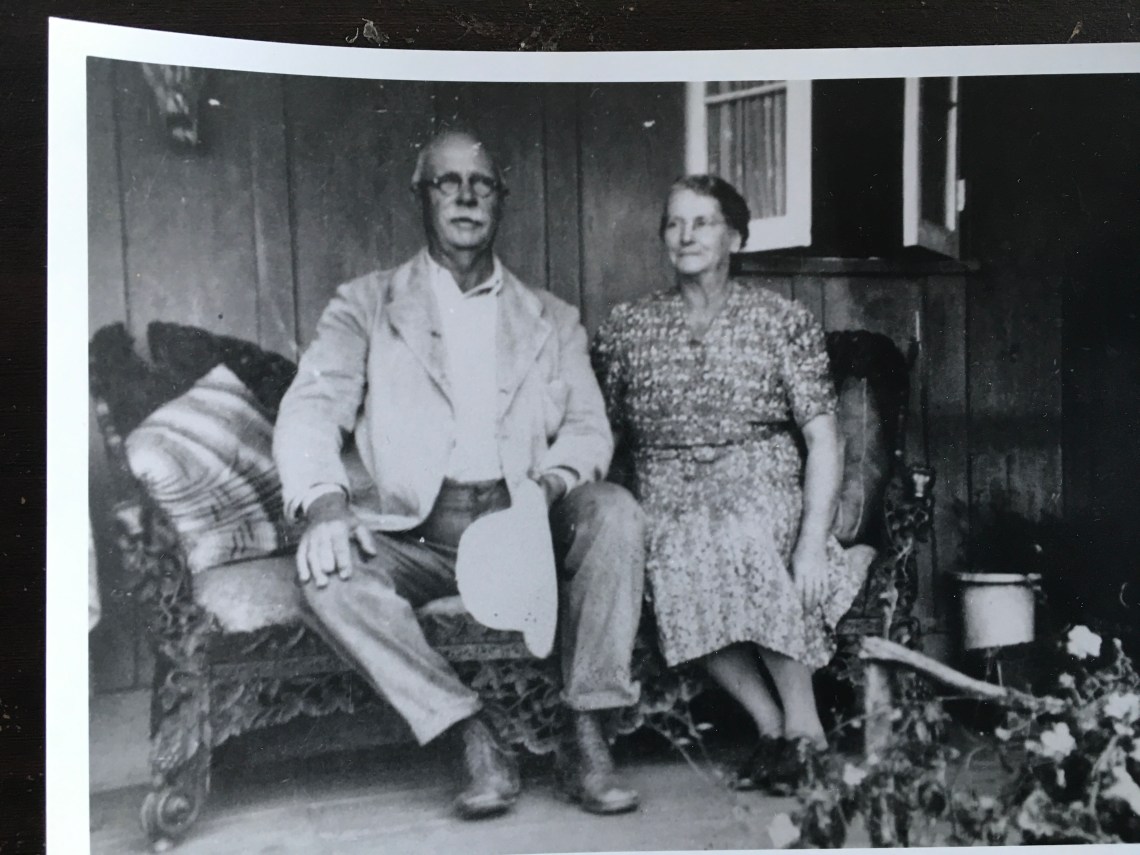
Wyndham and Grace Kirkman
Children of John Wyndham and Grace – Lionel Wyndham and John Meredith
Lionel Wyndham 1908-1963 educated at Michael house and DHS
M Renette Haines had Grace Renette 1938 and Richard Wyndham 1943-1954
John Meredith 26/09/1913-20/06/1996 (Cooch)
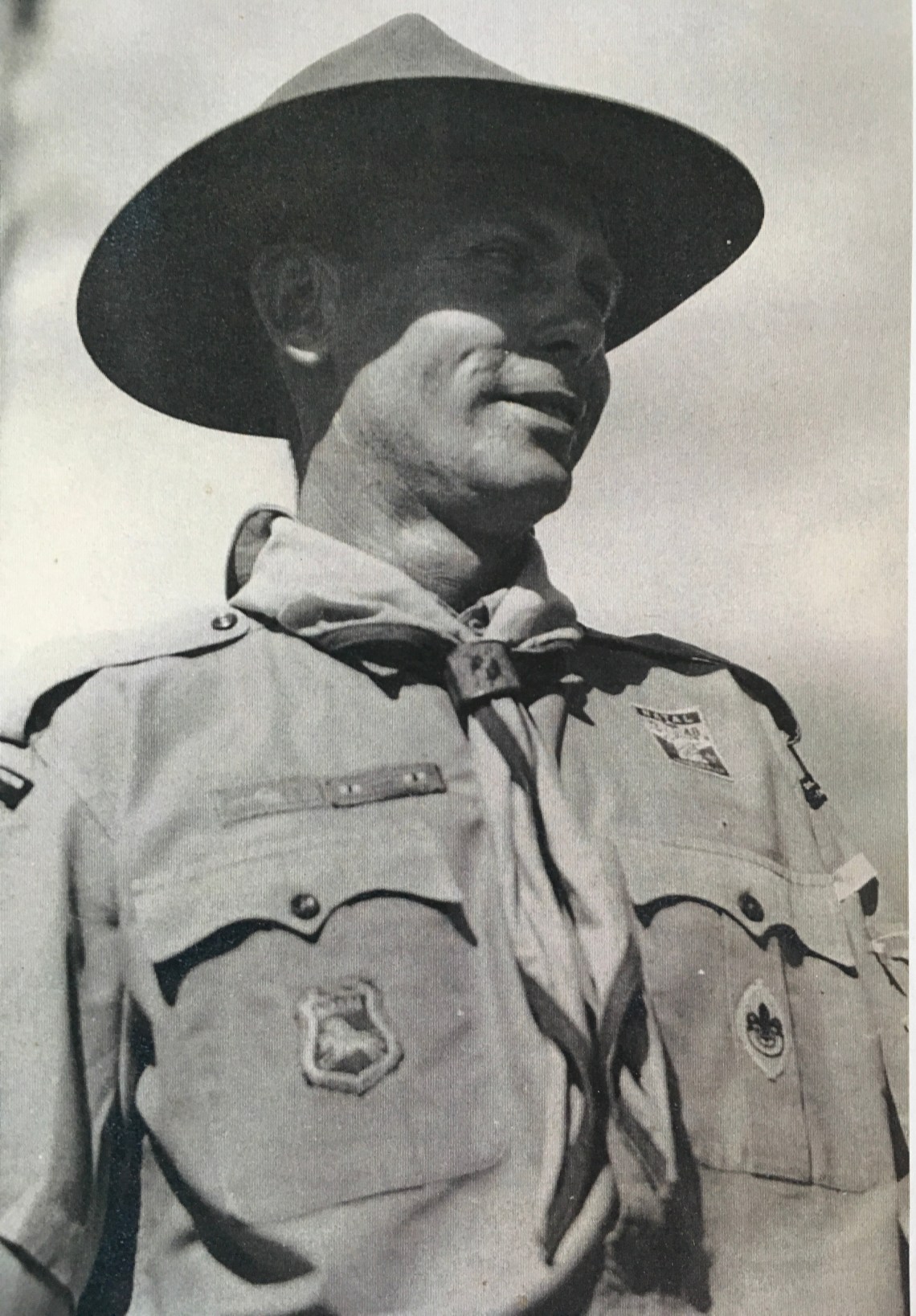
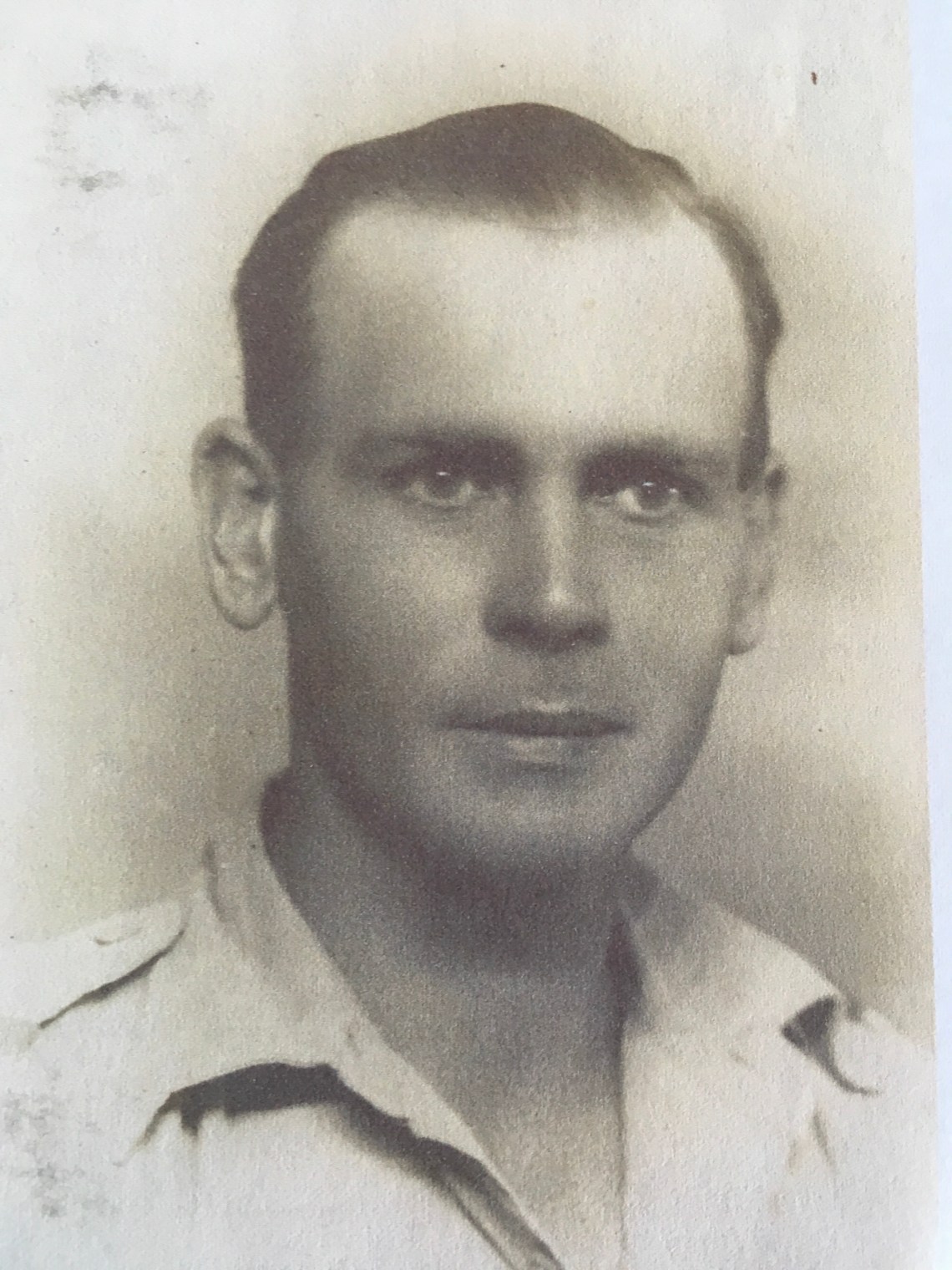
John Meredith Kirkman – -+1947
Memoirs – Take it or leave it
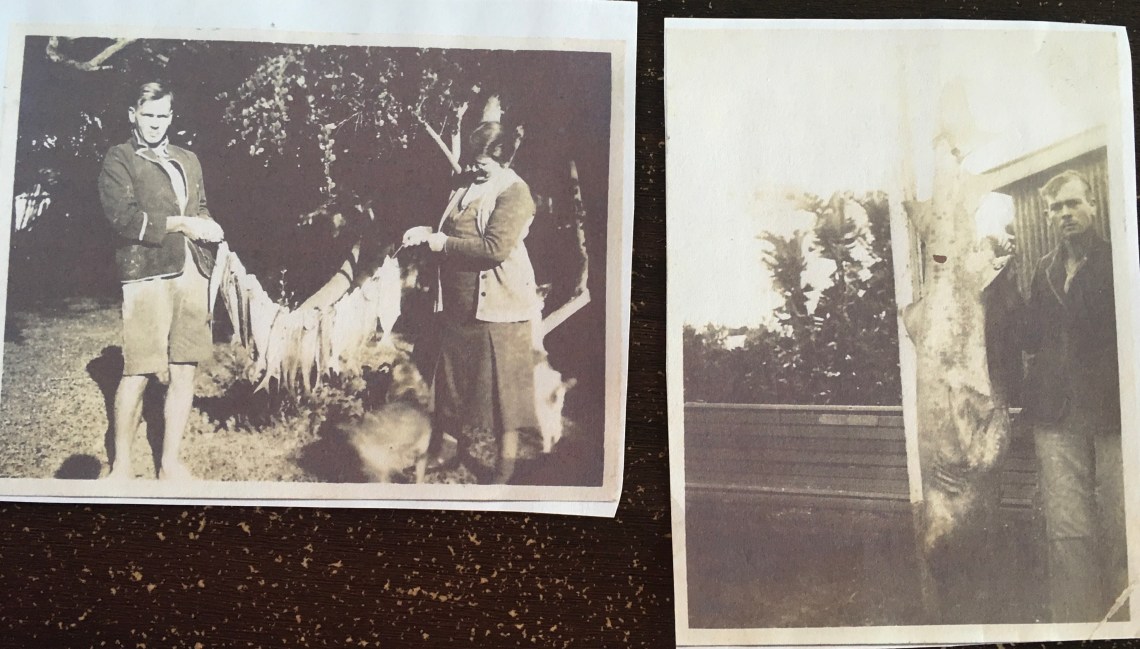
John Mderedith doing what he loved most – fishing
Grew up on the sugar estate Beeverstowe in Umzinto – happy childhood. He went to Highbury, St Andrews in Grahamstown and DHS. He was a keen sportsman and excelled at cricket. He went by ship to Grahamstown and being hoisted from the quay to the ship in a basket left an impression on his mind. After school, he attended Cedara Agric College and then farmed on Beeverstowe in Underberg / Himeville area. 1937 his dad bought a farm on Polela River named it Beeverstowe.
During this time, he served with the Natal Carbineers in North and east Africa.
Very active fisherman in Underberg and Himeville Trout Fishing Club. Known for his public spiritedness.
Dairy farmer on Beeverston on Polela. Had the big trout in Himeville pub for years.
He played a little bit of bowls, cricket (he was aw wicket keeper) for Underberg team played in Himeville. He did woodwork (boxes, tables, boats) In later years at Scottburgh Old age home he used to stick shells together. He was a sideman at church. He would take every July off to migrate to Ifafa beach to his folks and spend the entire month fishing. Sold beeverstowe in 1963
He joined the NPB 1964 – 1970 where he managed the fish hatchery at Nagel Dam and later at RNNP retired to Scottburgh In this later years he became a keen golfer and was appointed green keeper at the Scottburgh golf course. When he grew too old to fish he spent his time collecting shells He and Mollie celebrated 55 years of marriage for Mollie dies since then he has managed his life and affairs admirably. Cooch was always reliable frank a loner difficult at time and a character know by many.
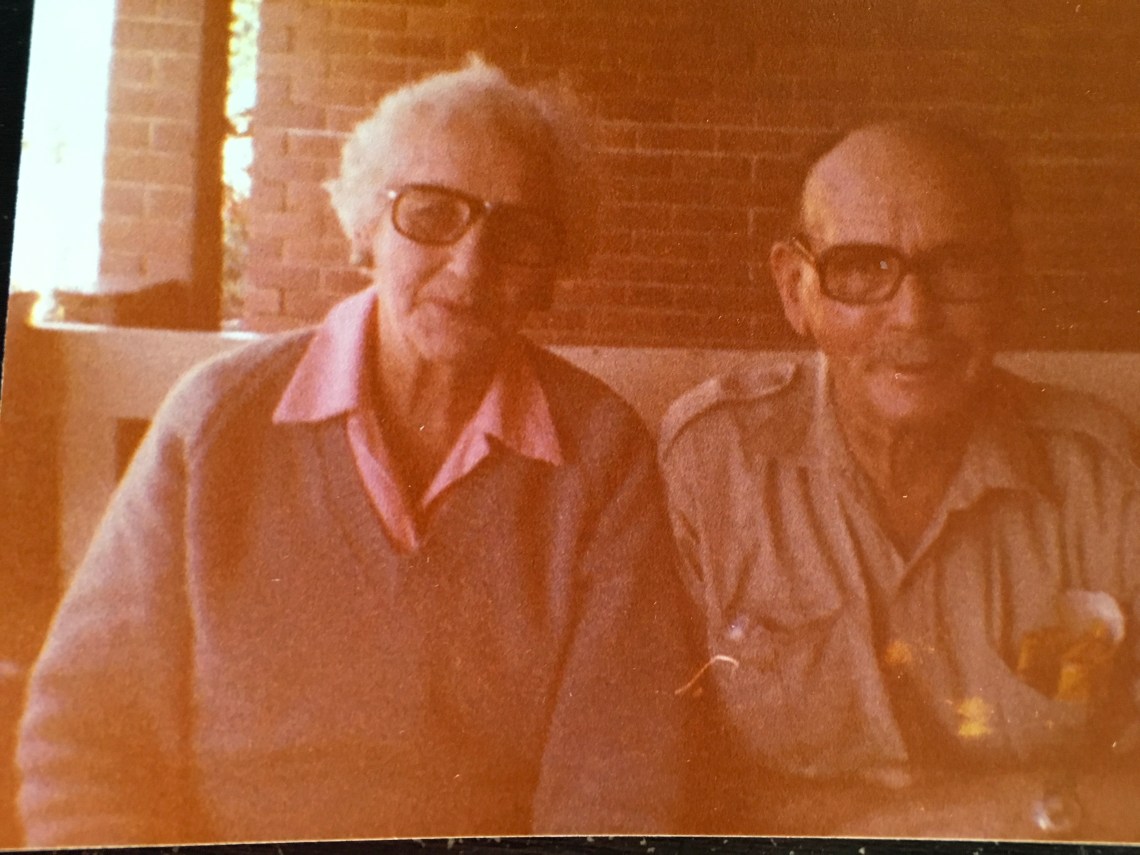
Mollie and Cooch (Meredith) at RNNP
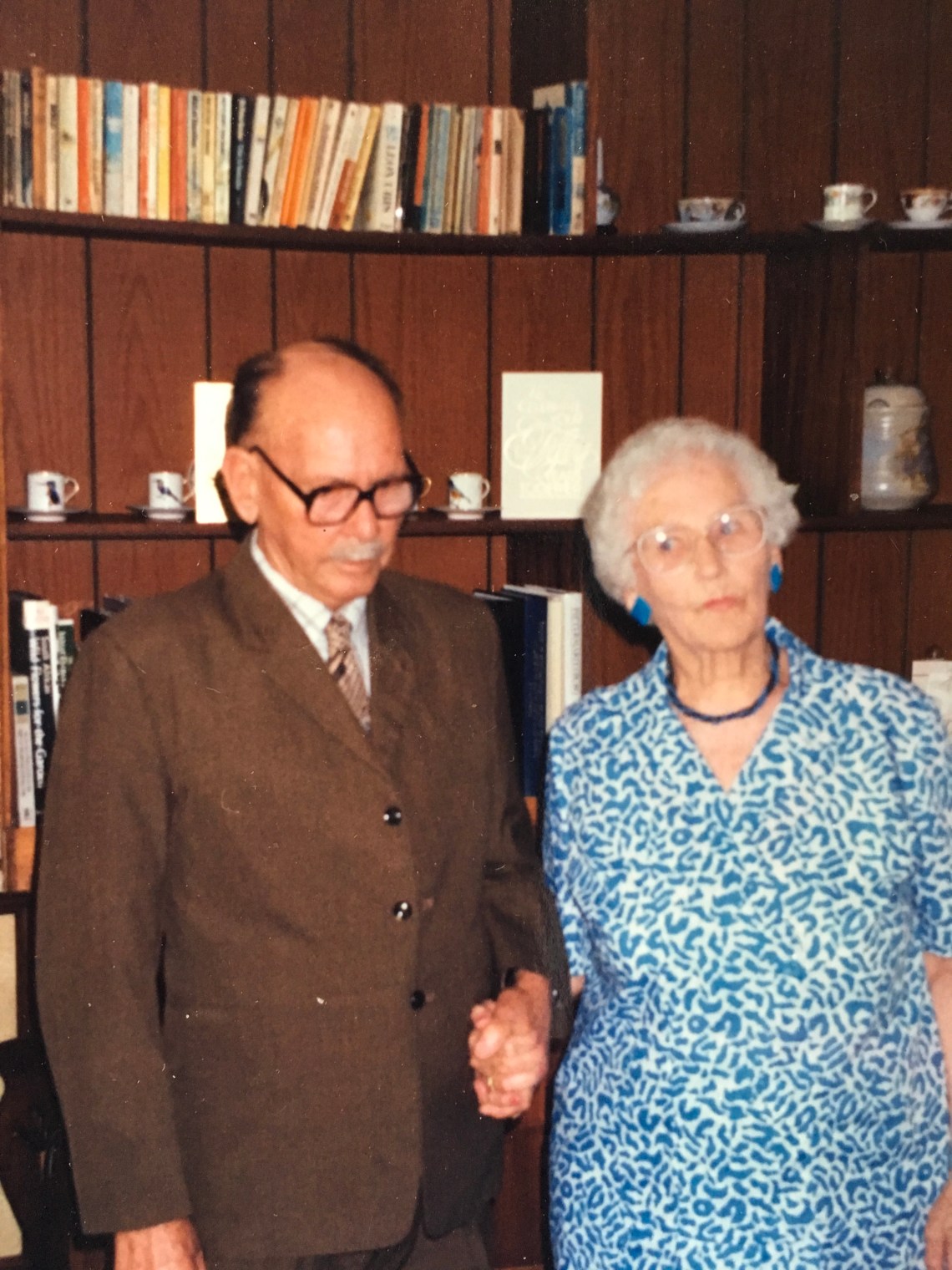
Mollie and Cooch at their golden wedding anniversary 1987
Married Mollie Frankland on 16/12/1939 at St Peters Church in PMB.
B xx d 20-04-1995 her father was Wilfred Frankland. He lived in South Africa from 1900 till his death in August 1965 at the age of 90
A BRIEF ACCOUNT OF THE LIFE OF WILFRED FRANKLAND – BY MOLLY KIRKMAN
My father WF had one brother Guy and these two boys were left orphans very young in Armley Leeds Yorkshire GB. They were brought up by two maiden sisters of this mother, Honor and Emma Guy. From reports these two spinsters were very strict and these two boys led a disciplined and apparently hard life during their boyhood. At eh age of 21 they received a small inheritance and with this money they both emigrated. Guy the elder to Canada and Wilfred to South Africa. Wilfred had a cousin in SA, Edward Myers in PMB, who had inherited a tailor’s business from his uncle Mr Mason, so with a reunion in view, Wilfred embarked on the Pembroke Castle in about 1900 en route to SA. The voyage took one month. Wilfred had learnt his profession from his uncle William Frankland in Leeds. They had been involved and employed in the building of many beautiful buildings in and around Leeds. Viz. Bartholomew’s church of England in Armley. It was therefore that Wilfred did not find it difficult to find a job in PMB which at the time was flourishing as a military town shortly after the Anglo-Boer wars and many beautiful buildings were being erected. PMB was very colourful at this time. The British regiments were stationed at Fort Napier and would march down Longmarket Street on church parade – the Irish regiment to St Mary’s roman catholic church which was then situated in longmarket street behind the present beautiful St Mary’s in loop street. PMB was a gay town in those days with balls at Fort Napier and other functions with a military atmosphere. Thus, most young people were caught up in the gaiety.
Wilfred had become engaged to Nellie Hopkins of Armley before leaving the UK. The arrangement being that he would send for her and they would be married as soon as he was established and earning a living. At this stage, he sent her a MIZPAH brooch which Rosalie has given to xxxx. Wilfred was enjoying such a good time after the deprivations of England and his strict upbringing, living in boarding houses, numerous in PMB that Auntie Mason – the tailor’s wife – wrote to Nellie and said you had better come to South Africa or you will lose your man”” She rushed over and they were married in February 1902 at St Saviours Cathedral Anglican church. This church has since been dismantled brick by brick, stained glass window etc and reassembled in the Transvaal. Dick and Judy Richardson (Katherine and Clives son’s, 1st marriage) were married in this cathedral now erected in mid-rand.
Wilfred was in the public works department of government service for 45 years
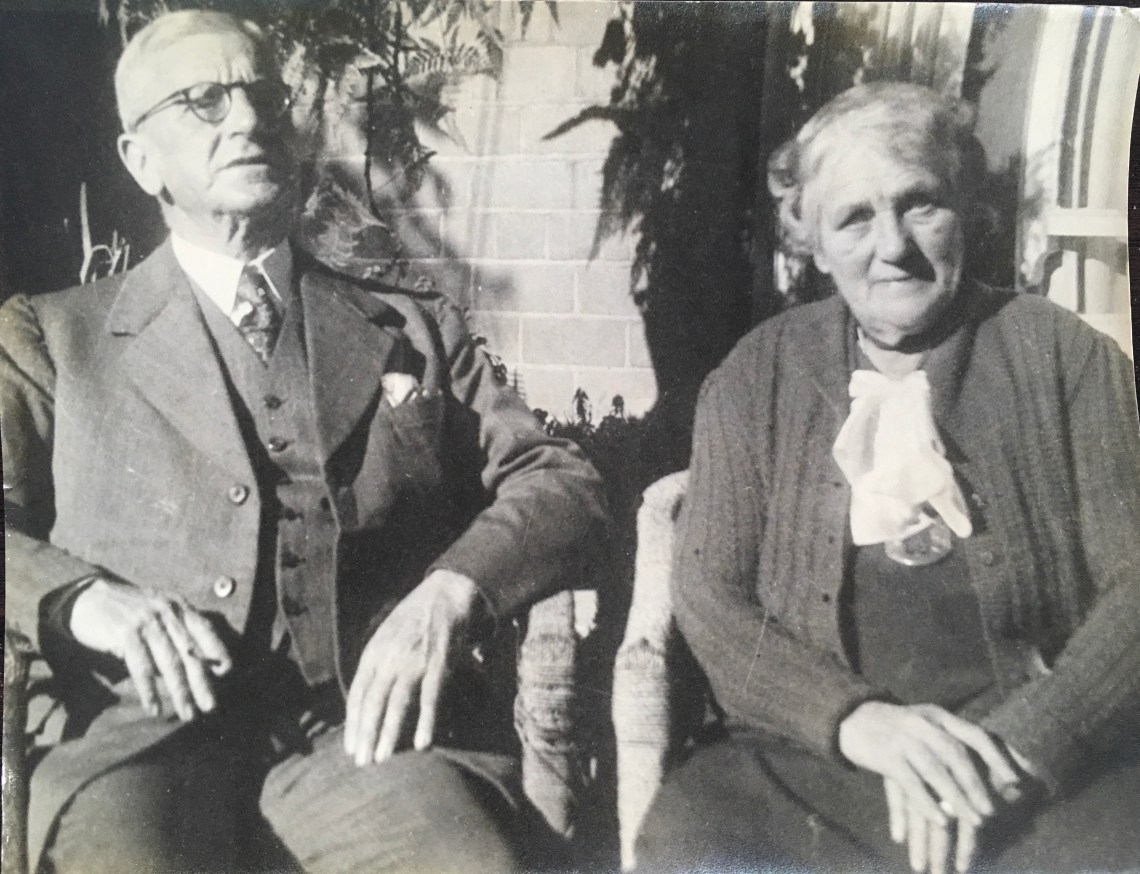
Wilfred and Ellen Frankland
They had two children Martha Elizabeth (called after her two grandmothers) born 06/08/1907 and Wilfred Guy born on 15/11/1914.
The couple acquired various properties in PMB residing in Boom Street, Prince Alfred Street and finally in Bulwer Street.
Nellie died in April1952. Nellie was homesick at first, having lost her first child (stillborn) and so went back to UK on a sea trip. When the ship docked in Cape Town there was a cable waiting for her informing her of her mother’s death. She continued her trip but after visiting her brothers and sisters she was only too glad to return to PMB and never wanted to go back again.
Mollie went into teaching and taught for 11 years before marrying John Kirkman in 1939. Guy was a draughtsman in the surveyor general’s office in PMB and Bloemfontein until his death in September 1965. Guy had one son Rodney, who never married and died in PMB January 2005. The name Frankland died out with him.
Mollie was a primary school teacher taught in Umzinto PMB and Durban.
Memories from Rosalie (Roz – youngest daughter of Molly and Meredith))
Molly loved gardening and she always had a beautiful garden. She always had at least one vase of flowers in the home. She was a teacher by profession and continued with this during the years of her marriage by doing locum work in the district. Active in Woman’s Institute. She acted in the Drakensberg amateur dramatic society. “Drakensberg Players” pantomimes. Cooch helped on many occasions Music was a great love. Music music music…. They would host musical evenings – Molly on piano, Uncle Will on the violin and Ian on the teabox. She was the Church organist for as long as Roz remembers. She was active in the tennis club and then the local bowls club.
Roz remembers sitting on the trailer and her Dad driving the tractor through the flooded river to the pasture lands. She regularly bathed in the Polela because of water problem and their clothes being washed in the stream below the dairy (watercress used to grow in abundance in the stream)
She remembers the process of breaking in the oxen, she loved the dipping procedure.
They would all eat from a big drum of maas at the dairy and separating milk for cream.
They used paraffin lighting which you had to prime by pumping the. Inserting new wicks was a skill you had to learn – they used candles as well. For electricity, they used to turn the pump on and switch it off at bedtime. The kids used to play the telephone game with cans and string, playing hoola hoop and tennaquoits. They used to do trips to the beach, kitty driving
In PMB they used to catch the rickshaws now only present on the Durban beach front.
FARM BEEVERSTOWE – EDITH PADDOCK
This farm was in 1900 part of the farm Strathcampbell of 2300 acres. It was acquired under the crown grant system by Rev Moodie who came out from Scotland as a school teacher master to the mission at the Bulwer Trading College for Zulu teachers. He later returned to Scotland with his wife to qualify in Holy Orders and returned to Bulwer as Principal of the Ploela institute at Bulwer. The Moodie family consisted of two sons and three daughters. The land sloped gently from south to north and extended from the present railway line running through Woodford halt to the polela River.
In May 1936 Mr Bateman sold the fam to John Wyndham Kirkman (retired- Cooch father) of Ifafa beach for 3.5 pounds per acre together with sheep, certain cattle, horses, implements, tools and furniture. The Kirkman’s named the farm Beeverstone after their sugar estate at Umzinto (which they had sold). The old yellow wood house was overcrowded and full of antiques. Mollies mother-in-law had the never-ending task and frustrating task trying to keep it dusted and polished in aa house that was neither weather-proof nor dust-proof. Molly still had the beautiful carved couch and a matching console table.
They lived and farmed Beeverstone from 1938 to 1963 and during this period established pastures, grew mielies and potatoes and introduced Friesland cattle to the existing dairy herd. Mr Kirkman Snr built four dams on BS the first of which was the second dam built in the area.
After WWII, the Kirkmans sold 400 acres to Mr Roland Phipson (grand-son) of original owners. Reducing BS to 927 acres.
The road from HImeville was pretty bad and there was no direct road to Underberg except for cattle and horses. In 1936 Mr Bateman and Mr Moodie built a bridge over the Polela on Mr Moodie’s farm. In 1940 Mollie, Kitty and her nanny had a narrow escape on this bridge. Mollie was driving her father-in-law’s car and with a slight movement of the steering wheel she ended up with the front wheel on the kerb. Fortunately, she could reverse and making a fresh start of it drove safely across. Structural alteration was made to the house in 1955.
Taken from notes by Edith Paddock
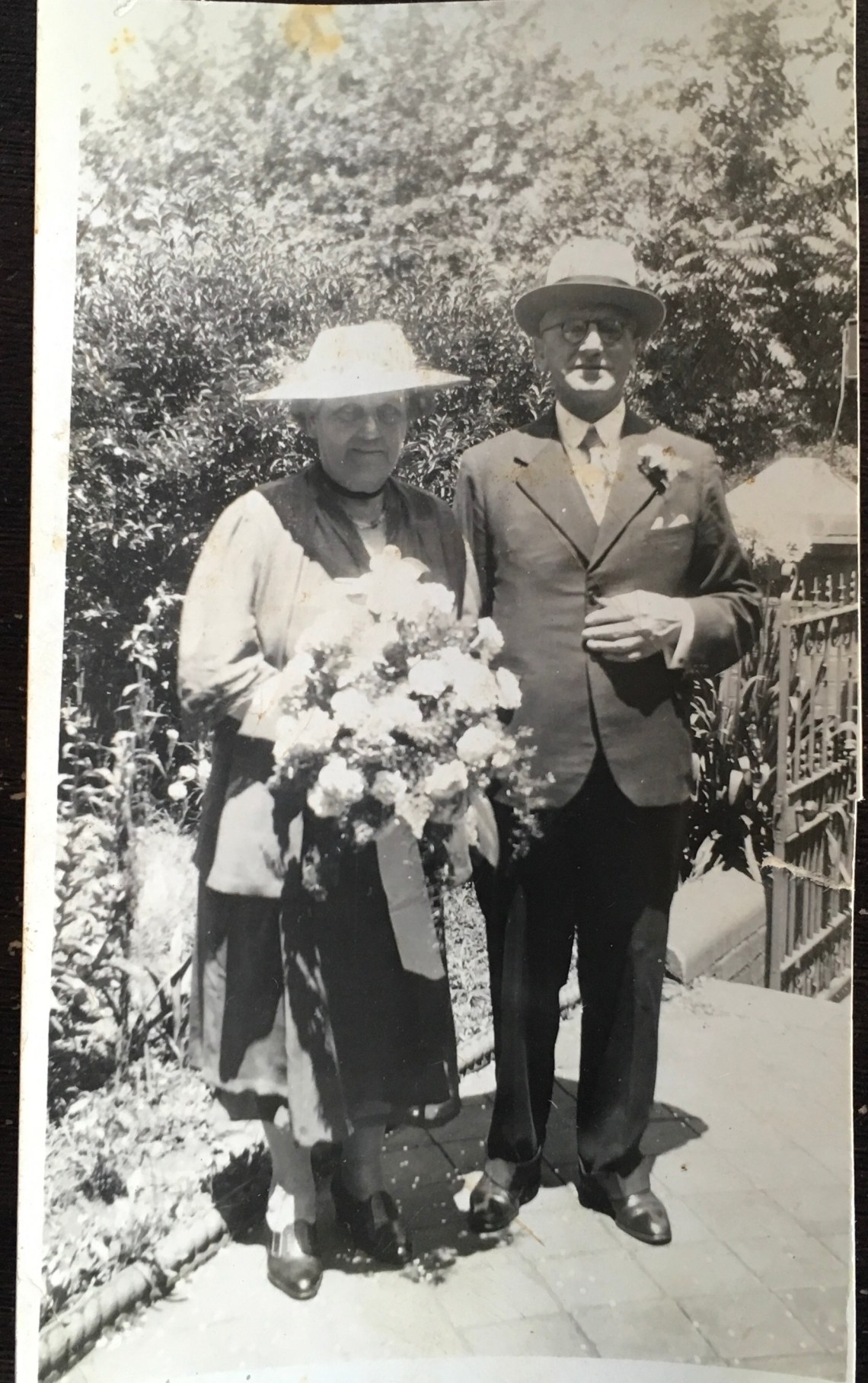
Wilfred and Ellen at Mollies wedding
Mollie and John Meredith (Cooch) had three daughters
Catherine Wyndham Kirkman (1940) married to Clive Richardson from Underberg
Had two children Lucinda Joy, married Michael Clohessy had two girls xxxx
and Stuart Owen married Judy (the church Wilfred Frankland and Nellie Hopkin were married in 1902, St Saviour Cathedral, was moved brick by brick and re-erected in Randjiesfontein – this is the church Dick and Judy were married in)
Eleanor Grace (1943) married to
Had two girls Camilla Clare Born 22nd June 1972 married Stuart Lawson Cumming on 16th December
Kids: Christopher Thomas Cumming born 3rd August ;
Jonothan William born 3 February 2002,
Andrew Alec and Bradley Martin born 12 January.
And Bridget Louise Born 20th July 1974 married Glenn Hilliar 24th September
Rosalie Wyndham married to Trevor Martin Wood from Bergville
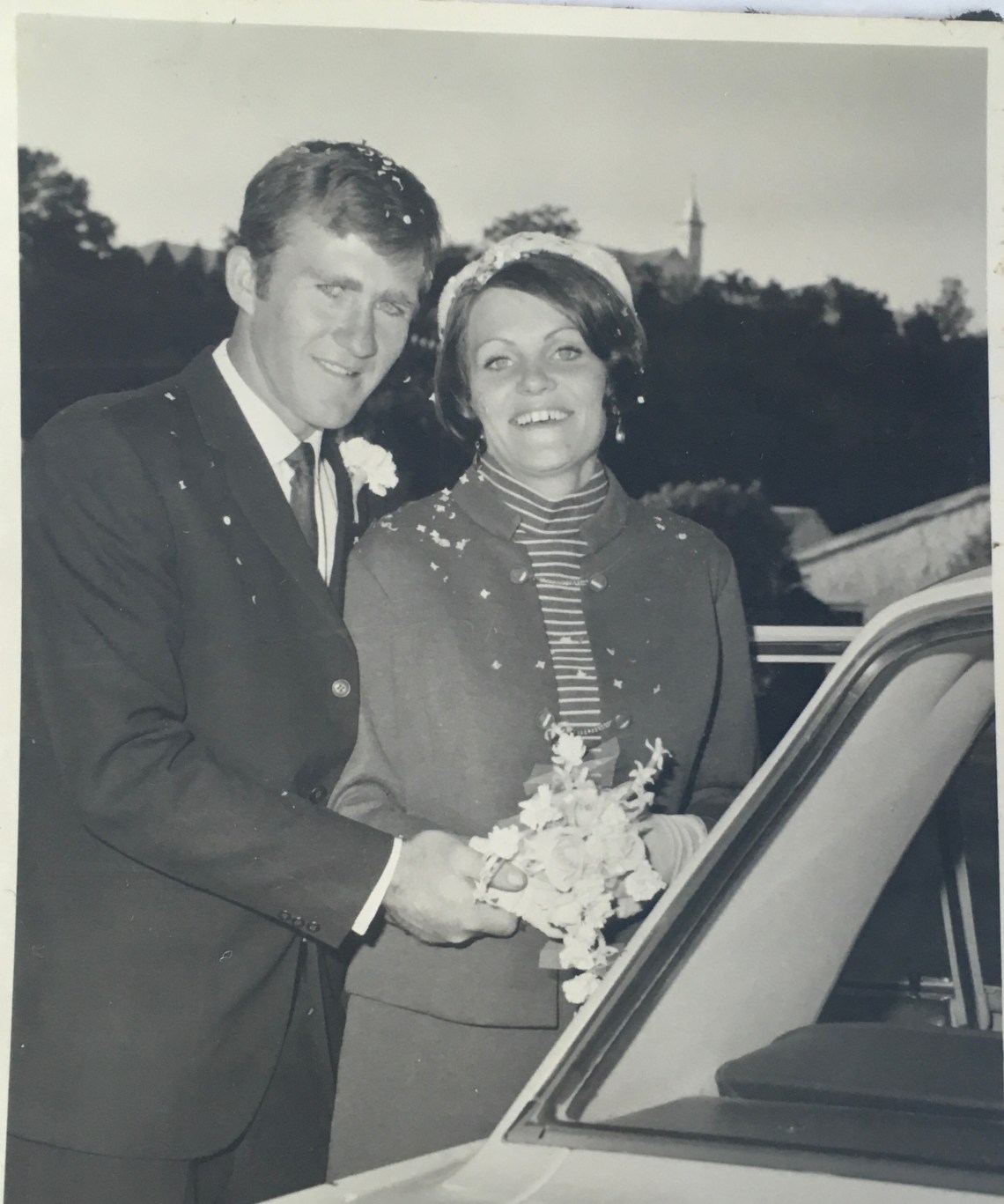
Ros and Trevor
Rosalie was born in (old) Greys Hospital in PMB
She went to GHS in PMB and boarded with Uncle Guy and Aunt Renette before boarding at school
Had four children Kerry Wyndham married to David Pool from Pietermaritzburg then Chad Cook
Hayley Louise (1972) married to Greg Muirhead from Mooi River
Kids: Rogan Brian (2000),
Connor Hamilton (2002) and
Michell Gregory (2009)
Kemsley Brian married to Megan Summerfiel from Howick
Kids: Wade (2000)
Brioney
Rebecca
Jeremy Martin married Lizelle from Bergville
Kids: Sienna
Michele
Jemma
Lisa McIlroy (born to Rosalie Wyndham) married Aaron MacIlroy from Durban
Kids: Kaylee
Declan
Grace
My Mom – Rosalie Wyndham Wood – by Hayley Louise Muirhead
Rosalie was born on 18/09/1946 in Greys Provincial Hospital in Pietermaritburg. She spent the first 15 years of her life living a very happy childhood on their farm Beeverstowe in the Underberg area. She was a real farm girl – mucking in and not letting minor things upset her day. Their farm was named after their old family estate at Equeefa near Umzinto on the Natal South Coast. The beauty of their farm is highlighted in the fact that it hosted the SA Scout jamboree in 1948. The farms beauty captured the imagination of the organisers and 800 scouts with their masters were housed in tents along the river. It had tree-lined paddocks and five miles of river frontage on the Polela River which was popular for trout fishing and of course the three dams which John and his family would spend hours on a boat he built called “C U catch-a-lot”. She remembers John losing his pipe when the fishing line hooked it out of his mouth. The house on the farm was unique made with yellowwood that had been sawn in the Umkomaas Valley. Rosalie’s memories are mostly of the garden and lawn that her mother loved. Molly was not a dedicated chef or baker for her family, except for her legendary gingerbread, but she loved her garden, music and the growing and arranging of flowers. This was all highlighted when she played the organ at the local Church for any occasions that were held there. She could be found pumping away at the bellows, operating the volume with her knees and all this done while singing and with a hat on her head. The family also hosted various music evenings outside in the garden. When neighbours and friends came around these also included dart games with the dart board suspended on an old Cyprus tree in the garden. Music evenings when Uncle William and Aunt Joan Findlayson came to stay were a family occasion as Uncle Will played the violin, their son played the tea-box (double base) and Molly played the piano while the family sang. The garden also included a croquet lawn and a tennequoit lawn and a gigantic tree stump on which John had put a table top. On the edge of the garden and through an old hedge, was the very productive orchard which would supply an abundance of fruit including apples, plums and peaches these would be sold during the summer. The takings, as well as the “”fruit float’’ was always hidden in her fathers tabacco pouch which was recycled after his pipe tabacco was finished. The fruit would be sent to town by the scotch cart which also took the milk to the “”Twin Streams Cheese Factory””, rain or shine it would be picked up from the holt that was on the farm. John Meredith was a very industrious and inventive farmer who referred to himself as a fisherman first and a farmer second. His love for the outdoors and nature together with his ”get on with it” and “make a plan” attitude to life definitely rubbed off on Rosalie. She has very fond memories of her father on the old vaal jaaptjie massey ferguson tractor with the girls driving through the pastures when the Polela river has flooded its banks and the furrow he built to help Molly water her precious garden, this was an endless source of entertainment for her. Rosalie loved being at home alone while her sisters had gone to boarding school. Her bicycle was very precious to her and she would entertain herself for hours by playing tennis on the garage wall. The streams around the house served as a bathroom with hysterics all round when the soap slipped out of their hands and into the water. The clothes used to be washed in the streams which were full of watercress. Going out to so your ablutions was a bit of an expedition before the flush toilets and indoor plumbing was installed. The two long drops in the yard were placed next to some prickly pear bushes and trying to avoid these while looking out for snakes all the while made the process quite a trip. The vaal jaaptjie is also the tractor my father did all his socializing on, with a case of Lion Ale on the top of the trailor. The roads would be impassable in the rain with the water running off Hlangoma casing streams what would hold up any traffic while they subsided causing a very muddy and slippery district road. All the farmers used chains on their tyres and these were quite an ordeal to fit. While the fisherman/farmer was doing his socialising Molly was also a very active cog in the wheel of the village. Molly and John enjoyed their sport in Himeville, John with his cricket and bowls and Molly with tennis and bowls. Molly taught in various capacities at the Underberg Primary School braving all weather in the family vehicle. Her passion for teaching all who came her way was highlighted in the memories that Mom has of her mom picking up all the roads department children from their camp on the road side and lifting them to school. This used to make mom very embarrassed pilling out at school with a whole bunch of kids. Along with all these activities in the village Molly was also a very active participant of the “Drakensberg Player” an ammature dramatic group who would put on a pantomime yearly under the direction of Kit Roberts. Trains played a very important part in Rosalie life. They would take a train to PMB, starting off with a long wait at the Donnybrook Station for the signals to change. In PMB they would be met by Uncle Guy (Molly’s brother) and between pilling into his little black car and the rickshaw pullers they would get to their granny’s house at 324 Bulwer Street. PMB was a maze of lane and 324 Bulwer Street was also near the cemetery. Mom would walk through these on her way into town. When mom stayed in Bulwer Street for her first year at high school she would have to navigate these lanes on her bicycle or on foot to and from school. A trip to PMB was a lengthy affair and would last the minimum of two days and only on very special occasions would the farm truck be used for the journey. The train also took and brought post out to the family post bag at Donnybrook in a leather pouch which was padlocked shut. This was taken and fetched from Woodford Holt which bordered on the farm twice daily. Ifafa Beach played a big role in Moms childhood, it was described by John Meredith Kirkman (her father) in his memoirs as “the most scenic beach resort and picturesque lagoon on the South Coast”. Granny and Grandpa Kirkman lived at the beach and for the month of July every year they would make a family expedition down to the coast. July was a popular month for the coast as it was a slightly cooler month and polio . which was a real threat, was more virulent in the heat. In the summer holidays Granny and Grandpa K would make a return holiday up to Beeverstowe for 2 or 3 months to escape the summer heat of the coast. The trips to get all the family and baggage down to Ifafa were always a logistical nightmare and not to be taken lightly. Grandpa K would meet then half way and load everyone up in his old Vangaurd NX 49 and John would have to go back to Beeverstowe for another load. There were 3 girls, 2 maids, crates of chickens and all the provisions from the farm to last the family for the whole month. The roads were all dirt and very windy with the canvas canopy on the back being a real dust trap and causing at least one bout of car sickness on the journey. When they got near to the house in Ifafa they would start hooting to let all know that they had arrived. Mom remembers all the servants running to get ready to help unload and such excitement filled the air. Their holidays in Ifafa lave such fond memories. Granny K ran her house like clockwork this inspite the fact that she did not drive and had to rely on ours. All the Indian fruit sellers were called “Mary and Sam” and they came every morning hopping along the railway line with their fresh produce in baskets hanging over their shoulders. The family ordered their meat from Umzinto and that came on the train all wrapped in wax wrap and brown paper and tied together with string. The train was also used for family outings to friends who lived up and down the cost and as far as Durban. Catching the train was a reliable and safe way to get around up and down the coast. At the end of these lovely long family holidays there were always buckets of tears shed by the children.
For high school Mom was sent off to GHS in PMB. For the first year he bordered with her family in Burger street as the BE was full but from then she was a full time border at GHS in PMB. It was during these years that electricity came to the farm – around 1957 ?). It was also during her high school years that her father sold the farm and retired to Ifafa Beach. But when boredom set in he followed his passion and joined the Natal Parks Board. Here he worked in nature and did a lot of his favourite past time – fishing. It as also paying better than farming ever did. He was instrumental in the the running of the trout hatchery in RNNP and implementing a more “”visitor friendly”” atmosphere with tours and lectures which catered to many celebrities of the time. He describes their days at RNNP as idyllic with travels around the country with the girls when they could join them. After these perfect days they retired down to Scottburgh on the south coast and then up to Howick in the midlands and finally back to scorttburgh. After reading Grandpas memoirs “Take it or lezve it” I see where the love for Natal and for being a real natal girls comes from, this goies for my Mom and I.
After her schooling Mom went to work for the bank and was sent to their branch in Bergville after her training in PMB. She lived in town in various boarding houses and went back to visit her parents whenever she could. It was here that she met Dad, they fell in love and had a couple of kids. And they started giving us a childhood that only has the best memories.
My Father – Trevor Martin Wood -By Hayley Louise Muirhead
Trevor Martin Wood was born in Harrismith. Son of Daphne and Brian Desmond Wood. He had two sisters Glenda and Barbara Joan.
He lived on the farm Tugela which was repatriated by the government of the day when the dam Woodstock was built in the Bergville area. With this they moved onto the farm Zuurlager at the age of 2 years old. Zuurlager was the neighboring farm of Kia Ora which was bought by the Wood family from the Asmall famiy (Indian Traders in Bergville after they claimed it from the family Healm for a debt owing to them in the shop in town – the Healm’s lived in the mud house which is situated in the gum trees at the sheds. It was known as the “good shed”) .
Trevor and his two sisters – Barbara and Glenda, lived at the “Old Homestead” on Zuurlager with Brian and Daphne (his parents) and Jeremiah and Harriett (Trevor’s Grandad and Grandmother). He has very fond memories of this time which include jumping into the stream at the bottom of the garden and catching the frogs (plattannas). A very vivid memory of this time was the daily trekking of the fresh farm milk to the train stop at the Zuurlager siding on a horse cart, a daily adventure. While they lived on Zuurlager, Uncle Stan and Aunty Eddie lived at Woodlands and Uncle Gerald and Aunty Dot lived in autumn leaves cottage. During this time they built the present current red brick main house on Kia Ora. Once this was complete Jeremiah showed the true Wood stubbornness and refused to relocate from Zuurlager. Eventually enough was enough and Jeremiah and Harriet ware “forcible” removed by their children to the new homestead on Kia Ora. Upon the passing of Harriett, a helper was brought in to help care for Jeremiah but this proved to unsatisfactory for the “stubborn old man”. At around this stage Gerald had taken his own life and Dot had then moved with her two boys down to the Durban area. So with the cottage free Brian and Daphne and the tree kids moved over to Kia Ora to help take care of the old man. Trevor was about 11 years old at this time. On the passing of Jeremiah the family moved into the main house
When Trevor married Roz Kirkman they lived in the cottage and had their three eldest children there, until 1976 when they “swop” homes with Brian and Daphne and moved into the “main house”. Jeremy was born in Ladysmith while they were living in the main house.
After much needed renovation to autumn leaves cottage Trev and Roz moved back into the cottage in 2014 and Jeremy and Lizelle with their three girls (Sienna, Michelle and Gemma) moved into the main house.
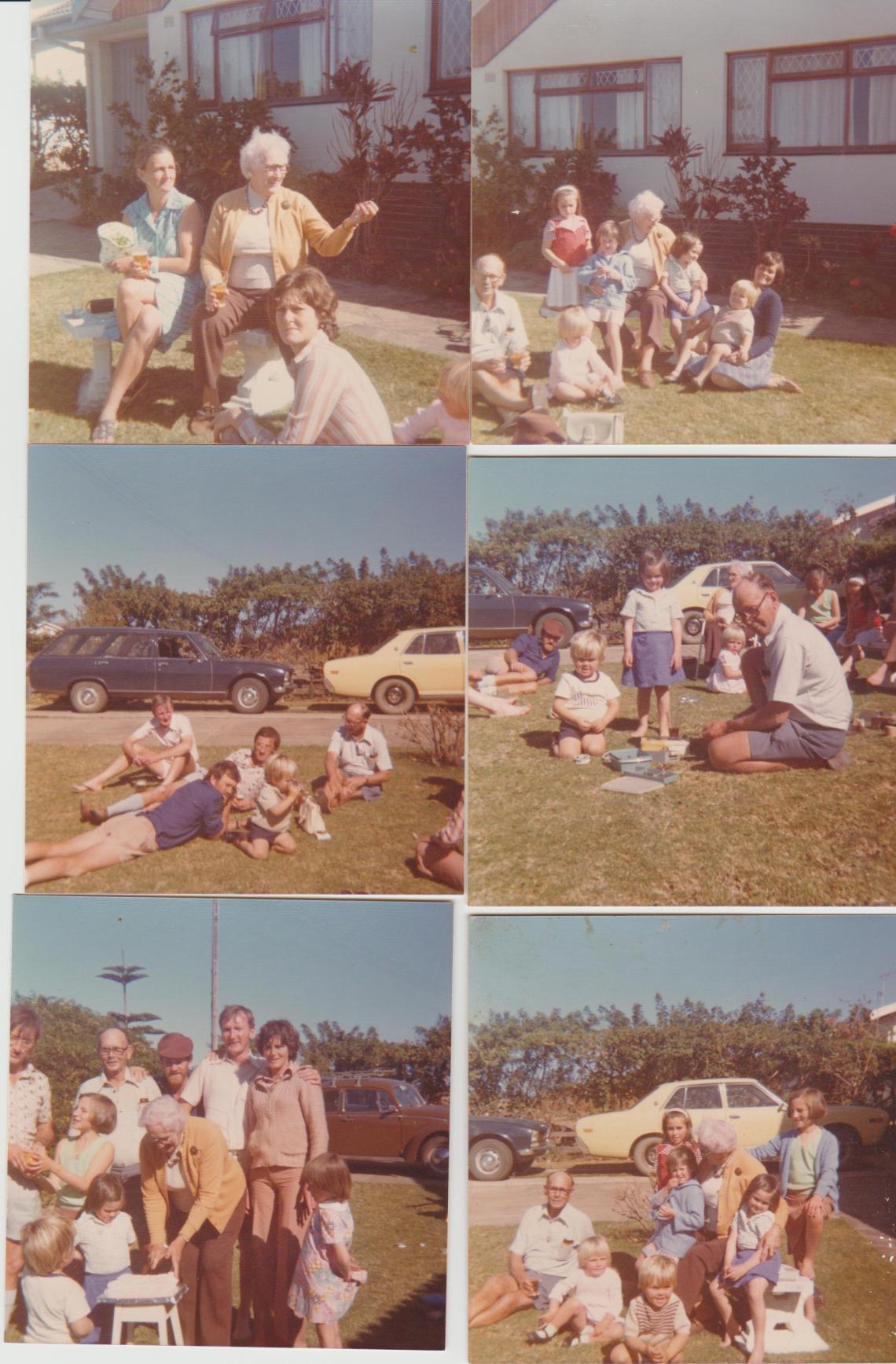
Molly 70th August 1977 at Scottburgh

 Pink Farm Chick