
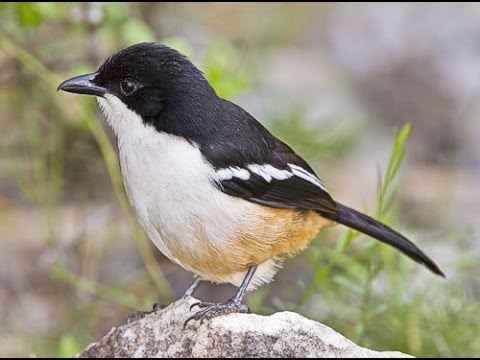
My beehive is under attack …. The Forktailed drongos hang around the hive all day for easy picking and snacks while the Boubou does an early morning pass by and snacks a few at the beehive drive by. The olive thrush has a route around the garden from the sheep camp at the bottom of the garden through the fence and around the beehive garden. This is his daily patrol. Snacking on his way … a little “padkos”…
My bees love having access to the bird bath and there seems to be an unwritten rule that gives them total access during the heat of the day. In the cooler morning and evening it is the domain of the birds!
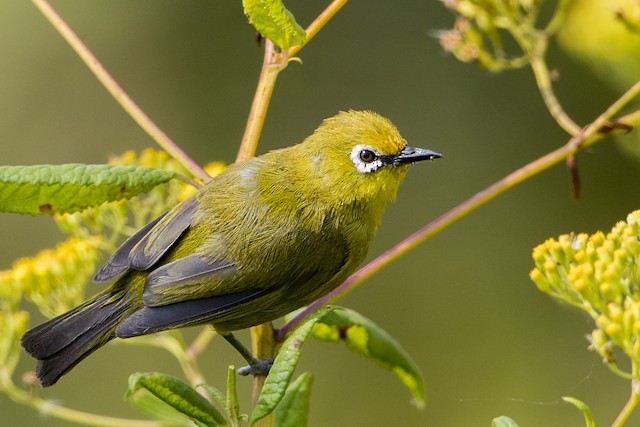
I am feeling very disappointed with the Drongos and might have to resort to some serious actions. It all started when a friend of mine warned me about the drongos and how they will totally ravage and destroy my beehive. I have never thought of them as a threat only that they are behaving as Drongos do and that my beehive will compensate for any loss of work, or workers, and still survive. The next horror was when I read that another of their food sources was smaller birds, like the cape white eye. This I am battling to digest!
They come across as such friendly birds, keeping me company in the garden, but under that appearance lurks a real threat ….
I have been following a pair of cape wagtail nestlings and their flying lessons. These little fluff balls grew up in the nest going out to our courtyard, the perfect place to escape the winds and learn to fly. They balance on the wall, doing their up and down balancing act and drop down into the courtyard. One of the cotton balls has even made it across onto the thatch roof (a distance of 7 metres!) It is easy to tell the difference between them and the parents as they still have a round little fluffy tummy that seems to battle to balance on their thin little legs. They dance and weave more than walk around the lawn.
The cape white eyes catch my attention when they come through the garden. In a flock of about 7 birds their melodious chirping and fluttering catch my eye. They normally do their fly by in the evening when the wind has quietened down and the cooler weather blows in. They like the protection offered by the trees and move quickly through the foliage. I am still horrified to see that they are listed as food of the forktailed drongo!
The Oriole, also called the golden bird of the African treetops, can not help but be noticed. When he comes to the bird bath the other birds quickly make an exit. He moves around the garden with intent and purpose, with his direct and fast flighting patterns. He is big (around 25 cm tall) , bright (he has a bright yellow breast), and bold ( his black hooded head). This is stark contrast to the house sparrow that are familiar company in the garden. Much maligned, in part due to their inconspicuous colouring and mostly because they are endemic to human settlements, being very sociable and adaptable birds. After their introduction into KZN in the late 18 century they have become a common site and their chirping is often taken for granted. One sparrow has however found his way into our family. “Crumbs” can be found regularly in the house but, always wary, he is quick to head for the door or open window when you are busy in his kitchen.
Another much maligned bird that makes an appearance in the sheep camps and the ploughed maze lands is the crow. Every time I look at him I think of a judge, with his hands behind his back, dressed in his rode and striding down the halls of justice. Nothing in his life is grey – only black or white. He either wants it or not – no maybe, investigations, trying ……
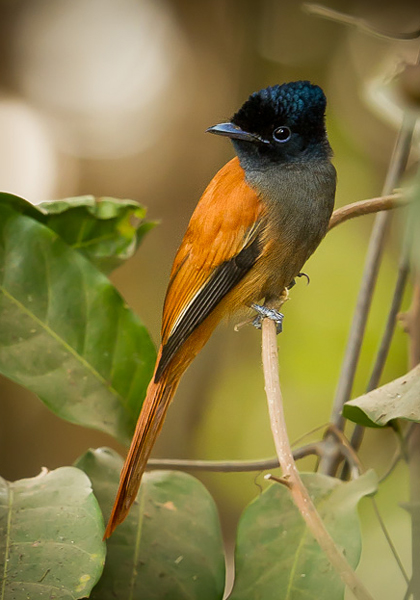
October means the arrival of the Paradise Flycatchers to the garden in pairs. What beautiful birds with an almost metallic iridescent blue circle around their eyes. Mesmerizing….

 Pink Farm Chick