The history of gardening is closely entangled with the history of agriculture with the kitchen gardens being one of the first and simplest priorities of a home.
The kitchen garden is used for growing edible plants and vegetables and some medicinal plants for the household. It is for domestic use and any surplus is often given away, bartered of sold locally to other members of the community. It has a very functional design often planted with companion plantings, quick access from the kitchen is key.
Ornamental gardens were mainly the preserve of the elite, and this trend has continued until quiet recent times. Ornamental gardening can be seen as an aesthetic expression of beauty through controlling nature and can be a display of private status of national pride. As the first civilisation emerged wealthy persons started many ornamental gardens for purely aesthetic reasons, and many of these we can still enjoy today.
The Loire Valley is a very fertile middle stretch of the Loire River which runs through the centre of France. It has a very favourable climate throughout the year and this lush fertile valley attracted the best of landscape designers throughout the ages.
Chateau de Villandry …
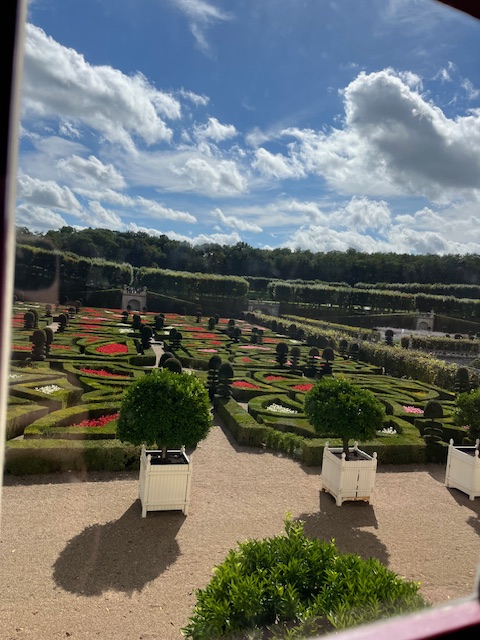
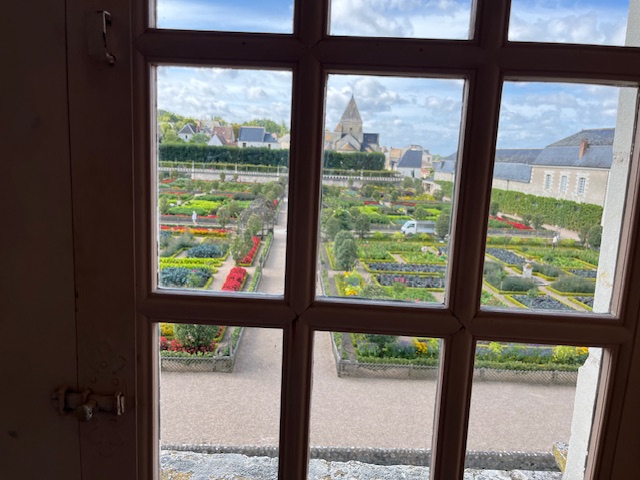
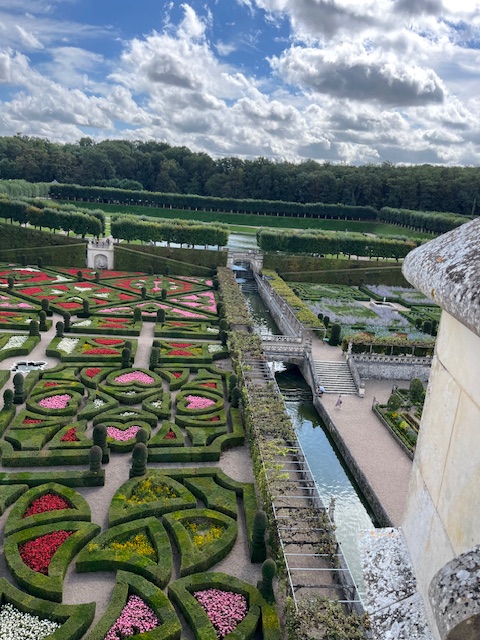
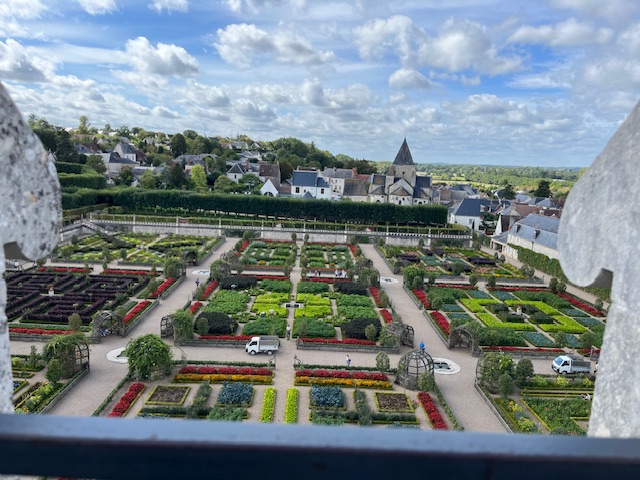
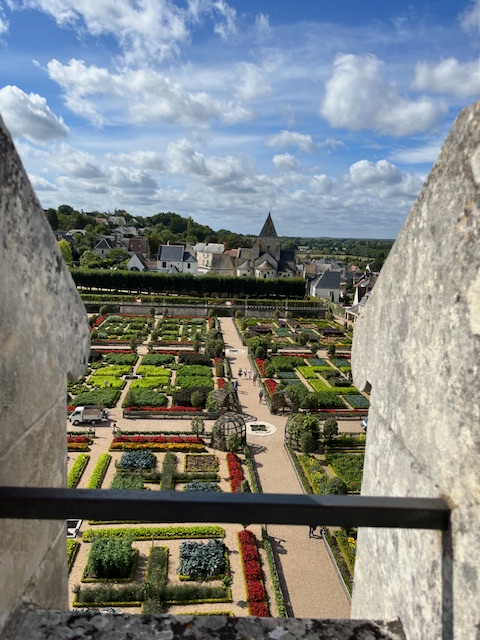
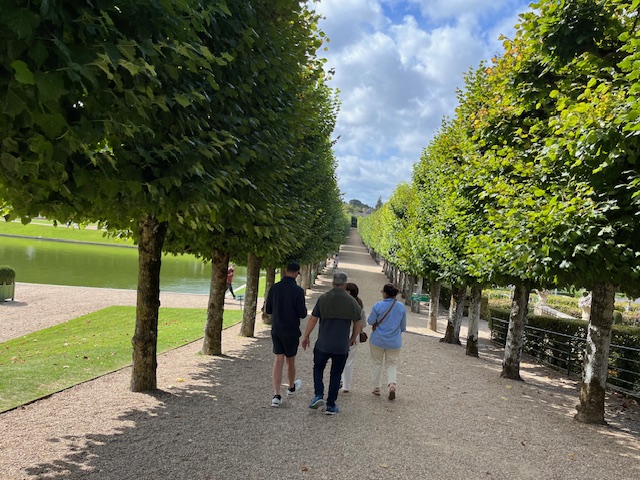
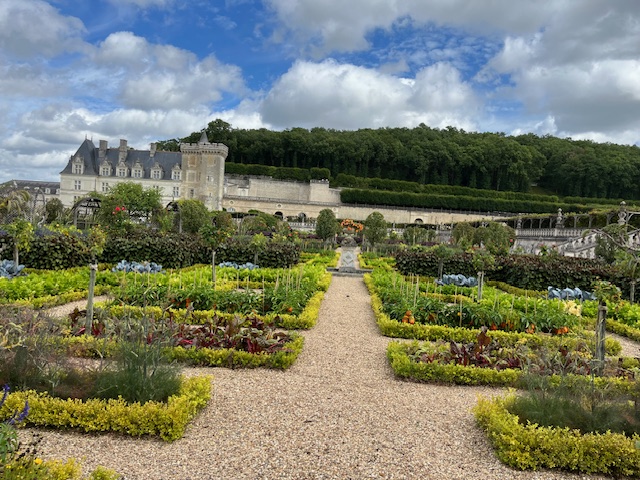
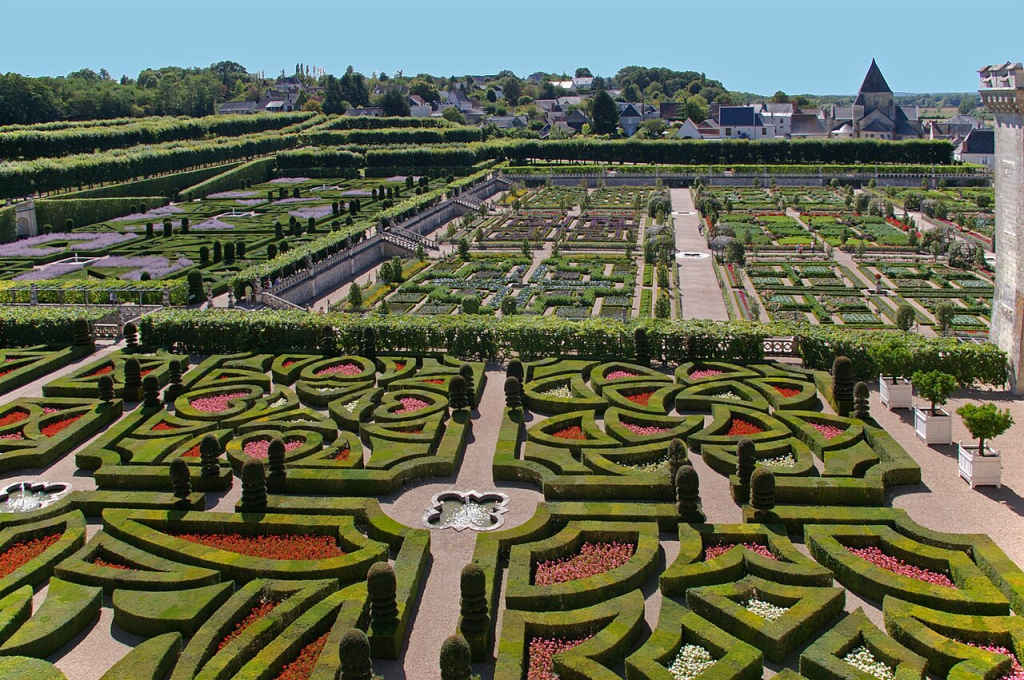
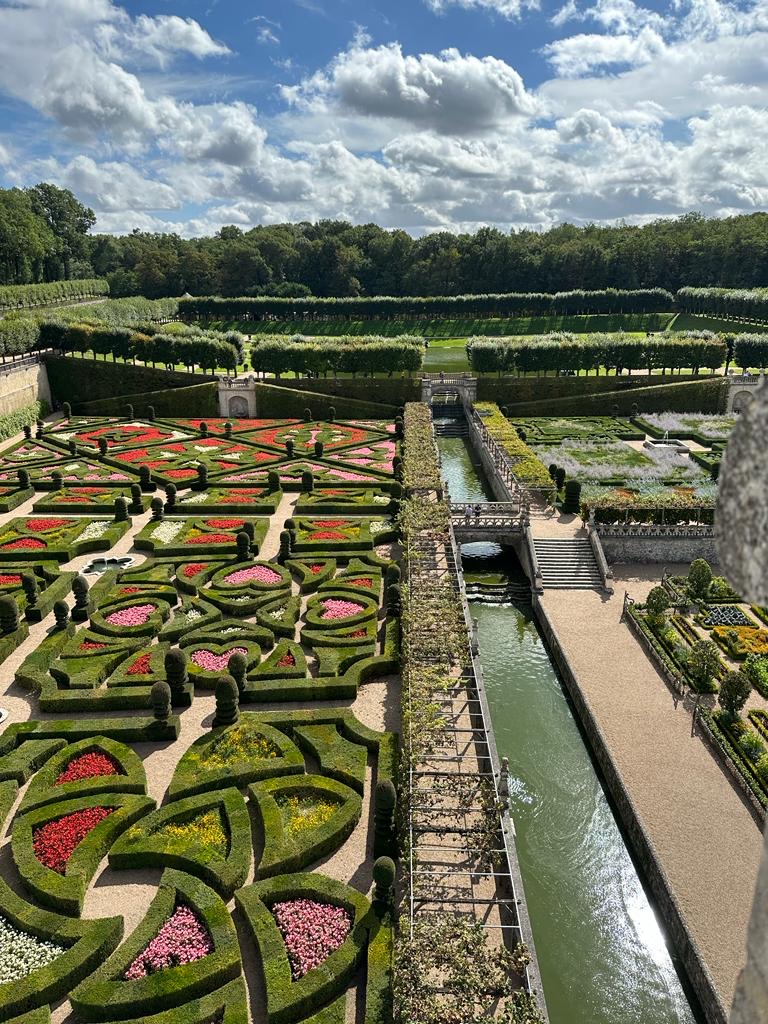
The Villandry gardens were originally designed in the Renaissance age, and although they have been re-designed the original design has been carried through and replicated. From originally being a Renaissance garden in the 16 century it slowly evolved into a French garden in the 18 century and a Landscape garden in the 19 century. There are various feature gardens within Villandry: the maze, the wild and untamed Wood Garden, the Water Garden, the Sun Garden, the Herb Garden, the Kitchen Garden and the Ornamental gardens. There are two major influences seen in the garden plantings and these are the French Monistic influence and the Italian influence. The monastic layout has been enriched with decorative plants, fountains, trees and flower beds.
The ornamental gardens need to be seen from the sky to fully appreciate the beauty but a view from across the wood and from the castle windows gives you an uninterrupted view and, in my mind, I wonder how more beautiful it can get. the ornamental garden encompasses the Love Garden and the Garden of the Crosses, both titles seem obvious when looking from above. the Kitchen Garden is pure renaissance styled in patches and planted with vegetable of alternating colour – blue leeks, red cabbage, purple beetroot and jade green carrot tops. The plantings alter with the season, but the monastic origins are shown in the layout
Chateau de Chenonceau …
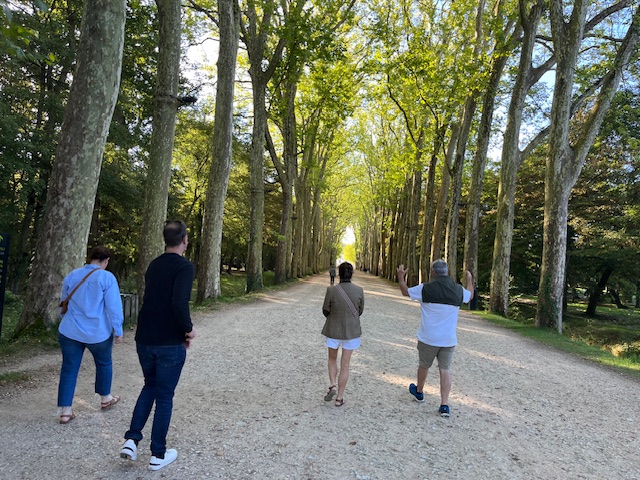
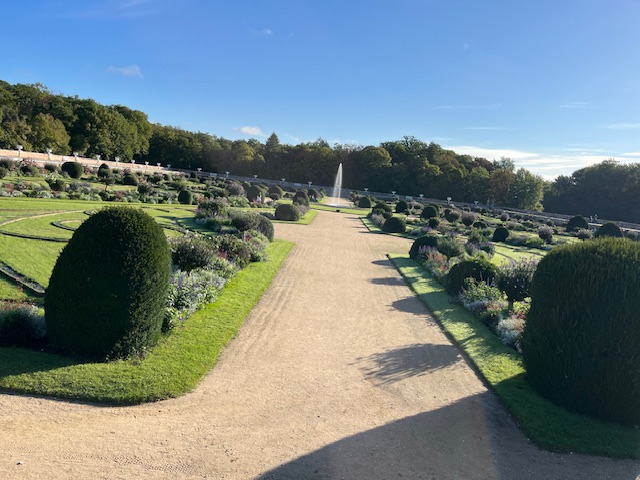
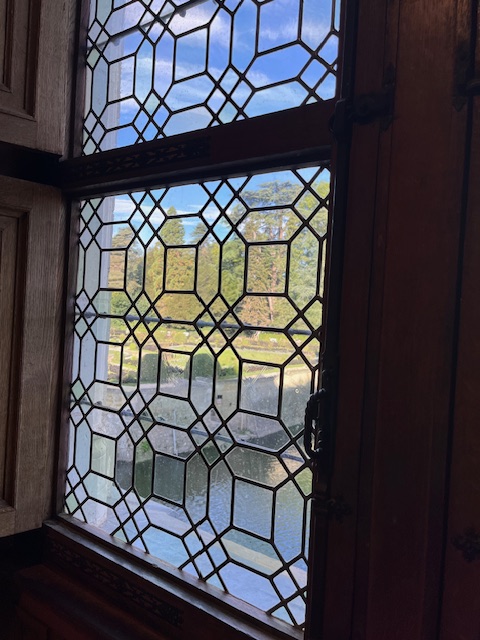
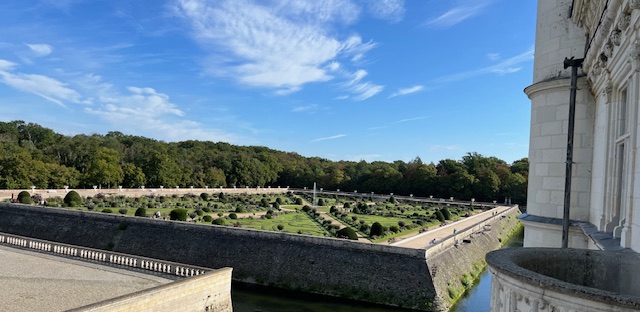
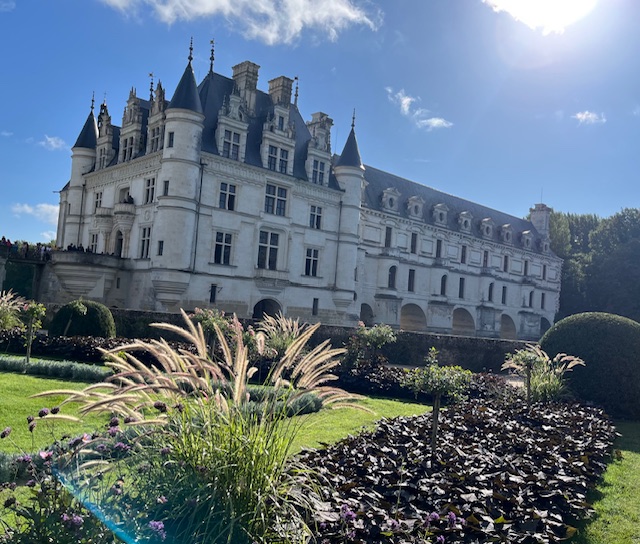
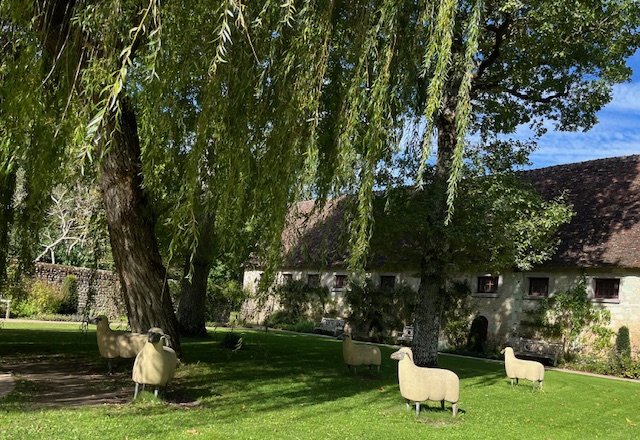
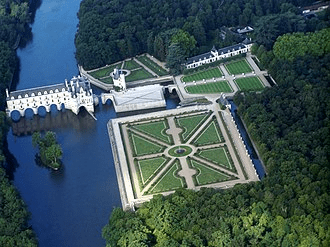
Chateau Chenonceau is built spanning the River Cher in the Loire Valley in central France. Terraces and raised walkways protect the gardens from flooding. The gardens, also known as the “floating gardens”, are a fine example of the Renaissance style, and the second most visited gardens and grounds after Versailles. The gardens have remained unchanged since they were first planned in the 16th century. The gardens are varied and vast and include ornamental gardens, a maze, an “English-style” park and a cut flower garden. The Castle was built on the site of a previous medieval castle built in the 12th and 13th century. and shows a strong gothic influence.
Chenonceau has been defined over the years by an almost uninterrupted succession of powerful women. They have built, restored, embellished and protected the chateau and gardens over the centuries, using the chateau for (amongst other things) a hospital, a seat of governance, a place of restoring the soul, and the hosting of royalty. Catherine de Medici hosted the first ever fireworks display in France at Chenonceau, during the coronation celebrations of her son Francis II. During WW2, because of the design of Chenonceau in that it spans the river, it was used as secret access into the “free zone” for families fleeing Nazi tyranny.
In summary, gardening has evolved from practical kitchen gardens to elaborate expressions of beauty throughout history. This evolution is still on going …

 Pink Farm Chick